There are three designations
In a particular discipline
I want to call to your attention
With an intriguing spin.
We’ve all attended school
And we have learnt a lot
But the more we learn of a matter
It always seems a mere drop.
That particular discipline
Is none other than Mathematics,
A subject I am thrilled about
Due to its number tricks.
The focus, however, today,
Is nothing about numbers
But rather, three strange designations
I wish for you to consider.
Please focus with me now
On the topic of fractions
And remember the title of this poem
Is: Strange Designations.
No doubt you are thinking
What could he possibly mean
But bear in mind my inquisitive friend,
This you’ve often seen.
I have long discovered
In my exploration of fractions
It is never considered improper
To deal in the vulgar and common.

Yet in our everyday living
This is an absolute “no-no”
And if a pupil should be so daring,
He’d be sure to know.
No offense is being proffered
And none is taken, I trust,
But I consider raising this matter
An absolute must.
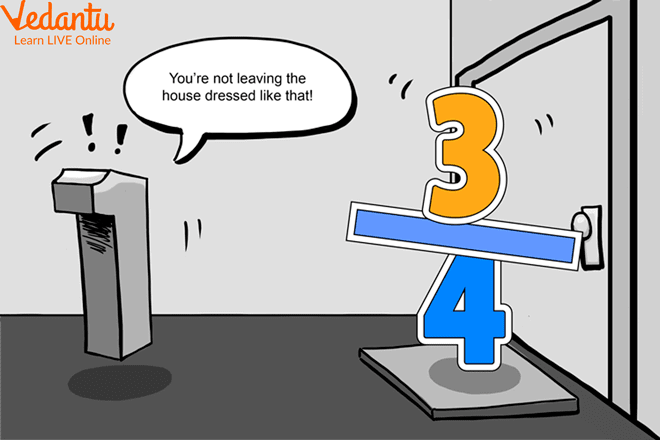
The parts of a fraction
Are its numerator and denominator:
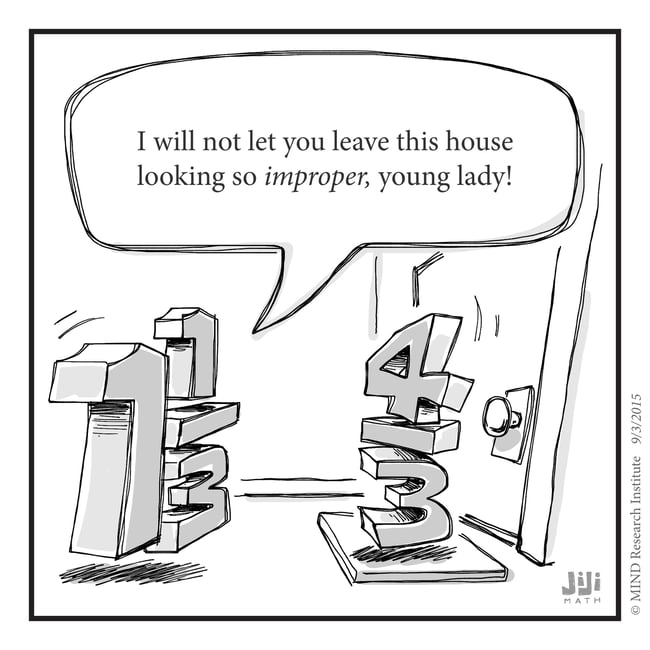
If the numerator is bigger
That fraction is improper.
As is designated in life
Similarly, it is with factions,
Top heaviness is deemed improper
But is also considered common.
Two designations so far
And now for the third and last,
While the first two may be excused
The third is of a poor class.
Common may be positive
But never so with vulgar,
In whatever shape, form or fashion
Vulgar is improper.
I can understand common
And I can understand improper
But however hard I try,
I can’t understand vulgar.
Why call a fraction vulgar?
Isn’t common, common enough?
Tell me, what is its origin?
This one is really tough.
You are absolutely right!
I have nothing better to do,
That’s why I write and write and write,
If you were like me, Won’t you?
Stewart Russell © June 3, 2024

No comments:
Post a Comment